On this page
If you've opened Google Search Console recently and thought "why are my impressions climbing while my clicks fall off a cliff", you're not going mad, and your SEO isn't broken. The same graph is showing up on sites across nearly every industry right now.
At the end of May and into June 2026, Google rolled AI Overviews out across a much bigger slice of UK searches. That's the AI-written answer box that now sits above the normal results on many queries.
And it's changed the maths of search: more people see your site, fewer click on it, because Google answers a chunk of the question before anyone scrolls.
Here's what's actually going on, what the data shows, and, more usefully, what to do about it.
What AI Overviews are
Search for something like "how long does a patio take to install" and, on many queries, Google now writes its own answer at the top of the page, stitched together from websites it trusts, with small citation links to the sources it used.
That box is an AI Overview. It sits above the traditional blue links, it's getting bigger, and it's appearing on more searches every month. Google has been expanding it steadily since 2024, but the late-May 2026 rollout pushed it onto far more UK queries than before.
What it's doing to click-through rates
The pattern is consistent everywhere: impressions hold or rise, clicks fall.
Independent research backs up what site owners are seeing. Ahrefs analysed hundreds of thousands of keywords and found the top-ranking result loses roughly a third of its clicks when an AI Overview appears above it. Pew Research found users click a traditional result about half as often on searches where an AI summary is present.
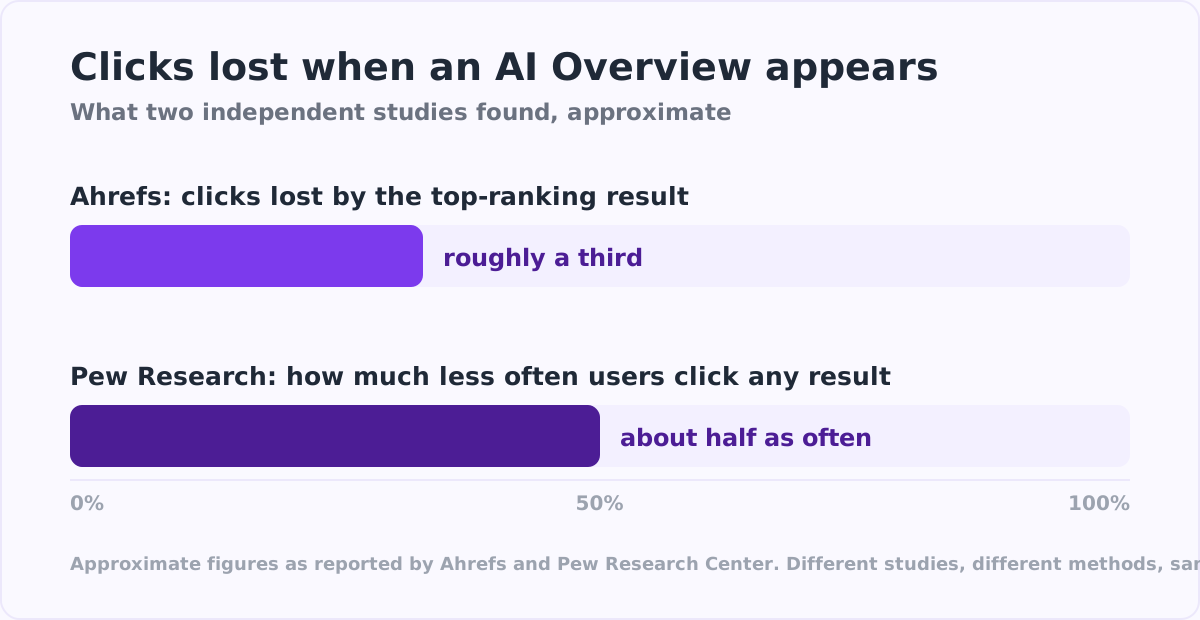
Two independent studies, same direction: when an AI Overview appears, clicks to the results below it drop hard.
The searches hit hardest are informational: the "what is", "how does", "how much" questions. The searches least affected are the ones where the searcher needs a human to actually do something.
What it looks like in real data
We watched this happen live on a client's account. MIW Patios & Landscaping is a Derby landscaping business whose site we built in February 2026. Their Search Console curve was textbook growth: 210 impressions in March, 688 in April, 1,452 in May.
Then June: impressions jumped again to 2,532, nearly double May, while clicks dipped from 27 to 21. Rankings hadn't fallen. Visibility was still climbing. The clicks that vanished were skimmed off by AI Overviews answering more of the informational searches before people reached the results.
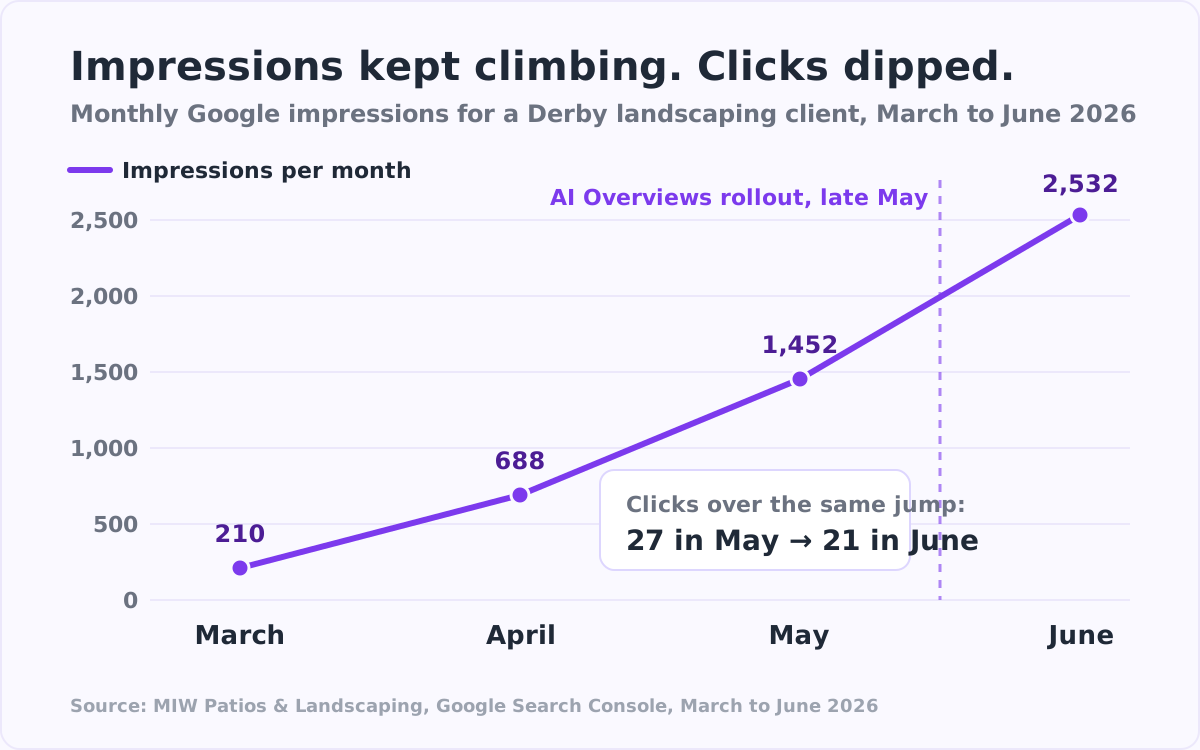
MIW's real Search Console numbers, March to June 2026. Impressions kept climbing straight through the rollout; the dip is in clicks, not visibility.
Their enquiries still went up that month. Which brings us to the point most of the panic-posting about AI Overviews misses.
Why this isn't a death sentence for service businesses
If you run a service business, three things work in your favour.
Someone still has to do the job. An AI Overview can explain how a boiler works. It can't fix one. Searches with local, buying intent ("plumber near me", "patio installer Derby", "emergency electrician") still show the map pack and local results. That's where you earn your money, and it's the part of search AI has disturbed least.
AI Overviews cite their sources. Those little links in the AI answer are a new front door. When Google quotes your page, your business name appears at the very top of the results, above position one, even on searches where you'd never have ranked first. Fewer clicks per impression, but a new kind of visibility that didn't exist before.
Your competitors are seeing the same graph. CTR fell for everyone. The businesses that lose are the ones who conclude "SEO doesn't work any more" and go invisible. The ones that win adapt their content to the new layout.
What to actually do about it
This is what we're doing across the sites we manage, and it's all stuff you can sanity-check in your own Search Console.
1. Add genuine FAQs to your key pages. AI Overviews are built from clear questions with short, self-contained answers, so a good FAQ section is the most citation-friendly format there is. Write the questions your customers actually ask, answer each in two to four sentences, and mark them up with FAQ schema. (What schema is, in plain English.)
2. Answer first, explain second. For every heading on your page, put the direct answer in the first sentence underneath it, then elaborate. Pages that bury the answer three paragraphs deep don't get cited. This is on-page SEO tuned for the way people search now.
3. Double down on local signals. The map pack is the part of the results AI Overviews touch least, which makes local SEO worth more now, not less. A complete, active Google Business Profile, steady reviews, and consistent local citations all feed it.
4. Judge SEO on the right numbers. Clicks per impression will keep drifting down for everyone. That's the layout changing, not your site failing. Track impressions (is Google showing you to more people?), enquiries (is the phone ringing?) and which queries you're shown for. Full guide: how SEO is actually measured, and how to track it properly.
5. Keep publishing. Visibility compounds. MIW's impressions have grown every single month since launch, straight through the AI Overview rollout. The sites that get cited are the ones with real, useful content for Google to cite.
That's the short version. For the full picture, including which AI crawlers you need to let in and what Google's own documentation says about all of this, read how to get your website to show up in AI search.
The honest summary
AI Overviews took a bite out of everyone's click-through rate at the end of May 2026, and that bite isn't being given back. Informational content is affected most, local and buying-intent searches least.
For UK service businesses the game hasn't ended, it's moved: be the source the AI cites, own the local results underneath it, and measure success in enquiries rather than clicks.
If your own Search Console graph looks like the one above and you'd like a second pair of eyes on it, send it over and we'll tell you straight whether it's the layout change or something actually wrong.
Frequently Asked Questions
Why have my Google clicks dropped but impressions gone up?
Almost certainly AI Overviews. Google now answers more searches directly at the top of the page, so more people see your listing (impressions) but fewer click through to any website (clicks). It is happening across nearly every industry, not just yours, and it does not mean your rankings have dropped.
Do AI Overviews affect local searches like plumber near me?
Far less than informational searches. When someone needs a plumber, a patio, or an emergency repair, an AI summary cannot do the job for them, so Google still shows the map pack and local results. Local service businesses are among the least affected, which is why Google Business Profiles and local SEO matter more than ever.
How do I get my website cited in an AI Overview?
Write content that answers one clear question directly, ideally in the first sentence or two under a question-style heading. FAQ sections with FAQ schema markup are cited often because they are exactly the format an AI Overview wants: a clear question with a short, self-contained answer. Being the source Google quotes puts your name in front of searchers even when they do not click. We cover this properly in how to get your website to show up in AI search.
Should I stop investing in SEO because of AI Overviews?
No, but you should measure it differently. Visibility still compounds, AI Overviews cite their sources, and buying-intent searches still send clicks. The businesses that lose out are the ones who go invisible; the ones that win are cited by the AI and still own the local results underneath it.
Is CTR still a useful SEO metric in 2026?
On its own, no. Historical CTR benchmarks were set before AI Overviews existed, so comparing against them will make healthy sites look broken. Judge SEO on impressions growth, leads and enquiries, and whether you are winning the searches that actually turn into work.
Want us to look at your Search Console with you? We'll pull up your real numbers, show you exactly what the AI Overview rollout has changed for your site, and tell you straight what to do next. Book a free call here.