Key takeaway
You've probably already paid for a website, maybe some cheap SEO too, and it brought in nothing. The problem is what cheap gets you, not websites themselves. One built to be found and kept sharp over time pays for itself in work you can actually measure.
You've probably already paid for a website. Maybe more than once. Perhaps a cheap SEO package got bolted on too, a monthly fee for someone to "do your Google". And after all that, the phone didn't ring any more than it did before.
So when you ask "is a website worth it", what you really mean is: I've spent this money before and got nothing back, so why would this time be any different?
That's the right question. Here's what went wrong last time, what actually makes a website bring in work, and how to tell the difference before you spend another penny.
Why your last website didn't bring in work
Plenty of businesses like yours get most of their work from a website. The problem is what a cheap one and a cheap SEO package actually get you.
A cheap site is usually an off-the-shelf template. It looks like a hundred other businesses, and it was never built to be found. The "SEO" sold alongside it is often a checklist and a monthly PDF full of numbers that never become enquiries.
Then it's handed over and goes quiet, slowly ageing while your competitors move. No lead capture, no tracking, no one steering it. Of course it didn't ring the phone. It was never set up to.
Side by side, "a website" means two completely different things.
| What you're really comparing | The cheap website & SEO | A site built to bring in work |
|---|---|---|
| The build | An off-the-shelf template that looks like a hundred other firms | Custom, built around how people actually choose someone like you |
| Getting found | "SEO" that turns out to be a checklist and a monthly PDF report | Real local SEO targeting the exact searches your customers type |
| After it launches | Handed over, then silence, while it quietly goes stale | Improved month after month as your competition moves |
| Turning visitors into calls | A contact form buried at the bottom that nobody fills in | Clear quote buttons and tap-to-call on every page |
| Knowing if it works | No tracking, so nobody can tell you what it did | Search Console and every enquiry tracked, so you see it working |
| What it actually costs you | Cheap up front, then nothing coming back in | More up front, then it pays for itself in won work |
The right-hand column isn't "a website" any more. It's a lead system. That's the gap between the money that disappeared last time and money that comes back.
What actually makes a website bring in leads
A site that earns its keep does four things:
- It shows up when someone searches for what you do
- It loads fast on a phone, because that's where your customers are
- It makes it obvious why you're the one to call, with real photos and real reviews
- It makes getting in touch effortless
Everything else is decoration.
The first one is where cheap SEO quietly fails. Ranking for "landscaper in [your town]" or "emergency plumber near me" isn't a checklist. It's the right pages built around what people actually type, a properly optimised Google Business Profile, genuine backlinks, and steady work over months. Skip that and even a beautiful site is invisible.
So what makes us different?
Fair to ask if you've been burned. The answer is in what our clients were paying for before they came to us, and what changed after.
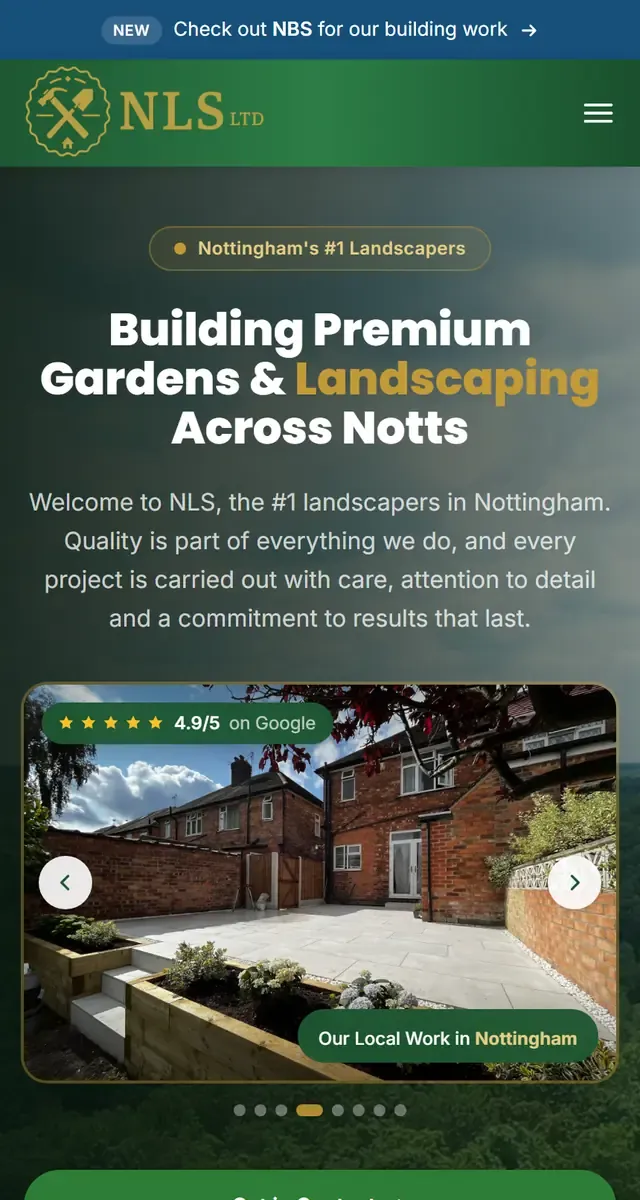
Take NLS, a landscaper in Nottinghamshire. Aaron had already paid a previous designer for a website. It had been abandoned, the domain wasn't connected to anything, and anyone who searched for NLS hit an error page. He'd spent the money. Online, he didn't exist.

This is what that earlier spend had bought: a domain connected to nothing. Zero presence, zero clicks.
We built him a custom site set up for local SEO and lead generation from day one, then kept improving it rather than handing it over and vanishing. That's the bit cheap providers skip.

Sixteen months on, that site and his Google Business Profile have brought in more than 550 direct enquiries. With an average job value of around £5,000, that pipeline changed the business. It gave Aaron the confidence to take his team from 2 people to 15. He doesn't chase work any more. It comes to him.
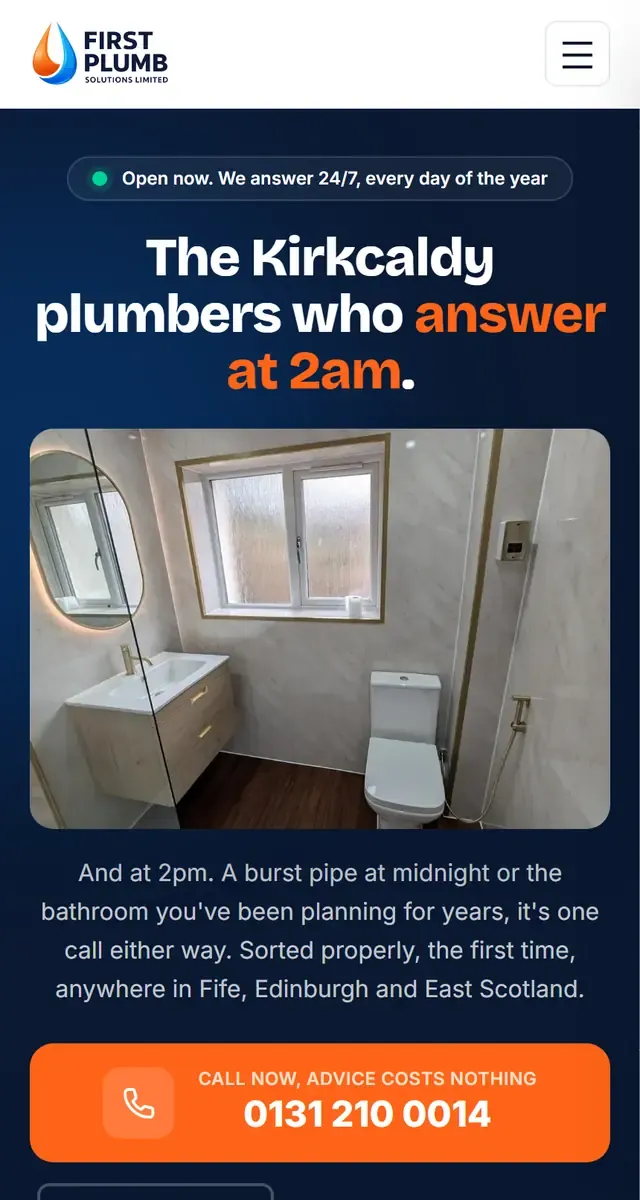
Same story with First Plumb, a Gas Safe plumbing team in Fife. Their old site was a generic template that buried the things that win a job, despite a strong reputation on Google and Checkatrade. The website just wasn't pulling its weight. Liam had been round this block before:
"I have used a few website companies in the past and these guys are on their A game."
Liam Balfour, First Plumb Solutions
These businesses weren't short of skill or reviews. They were missing a site built to be found, and someone who stuck around to keep it that way.
The proof is in the Search Console graphs
Three real Google Search Console curves from businesses that started roughly where you are. None of it is paid traffic.
MIW Patios, Derby: the best curve we've got
Jamie at MIW Patios came to us with nothing. No website, no Google Business Profile, not even a social page. In February his site had zero impressions and zero clicks.
We built it around what Derby homeowners actually search, fought Google's video verification to get the Business Profile live (five attempts), and let the SEO compound. His first organic enquiry came inside 90 days.
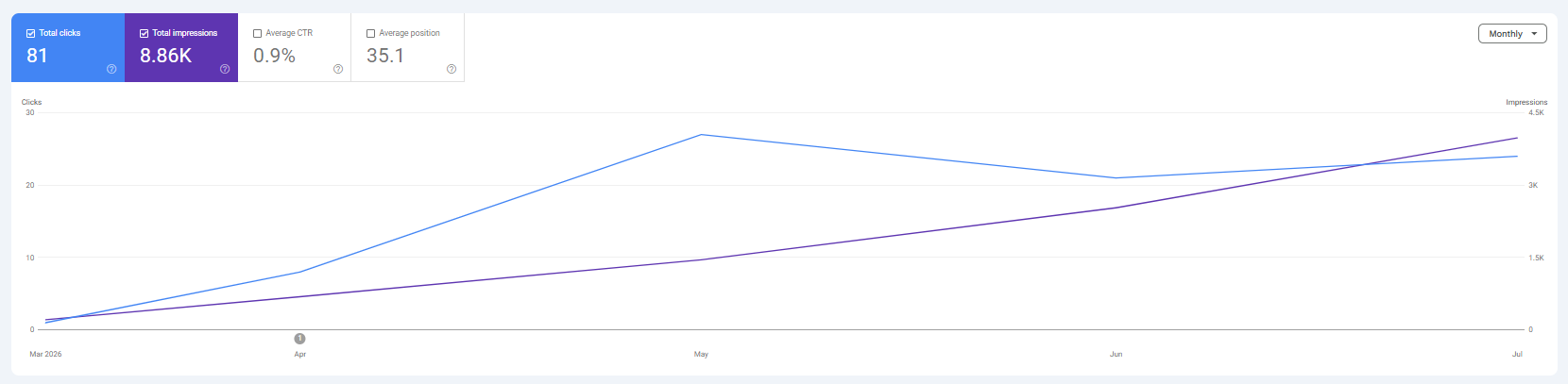
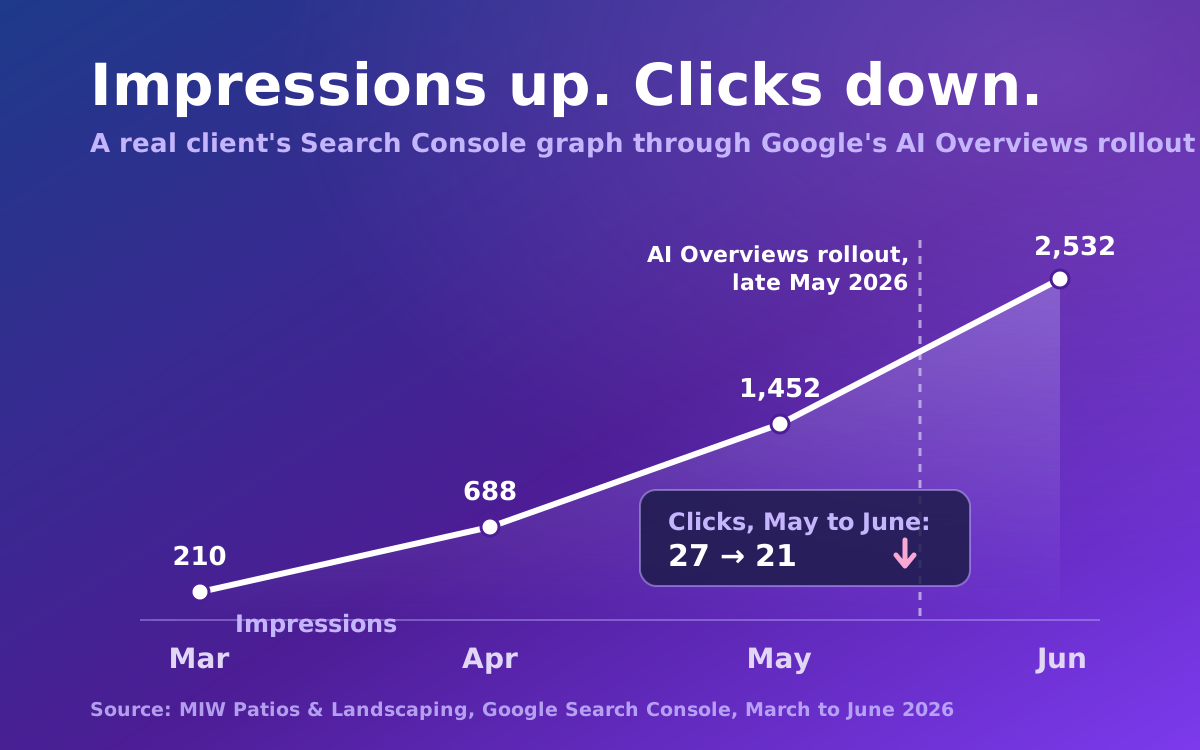
MIW's real Search Console data: 81 clicks and 8.86K impressions in five months from a standing start, on zero ad spend. Clicks dipped mid-year when Google's AI Overviews pushed click-through rates down across the industry, but impressions kept climbing, which is the signal that matters.
A construction firm in the North West
The client builds house extensions in one of the most competitive local markets in the country, against firms with ten or twenty years of head start, hundreds of reviews and years of backlinks. Here's the full case study.

537 clicks and 33.2K impressions in the months after launch, both climbing month on month, in a market most agencies won't touch. Over 100 enquiries in eight months, on jobs worth £30,000 and up.
Nottingham Landscaping Services: from a broken site to a steady climb
And back to Aaron, whose error-page site we replaced. From a page that didn't exist to 1.6K clicks and nearly 100K impressions, every enquiry traceable. Try measuring what a bargain SEO report did.

NLS's actual Search Console clicks. From a site that didn't exist to a steady, measurable climb.
So how much should a small business website cost?
Here's the number everyone wants. Every business is in a different spot with different competition and goals, so we go through the exact numbers with you on a quick call.
For context, a custom coded website in the UK typically runs £2,000 to £6,000 or more, and a full project with dedicated service pages, local content and an ongoing SEO campaign behind it lands at £5,000 to £10,000 plus. We've broken down what sits behind those numbers in website design prices in the UK.
The bit that catches most people out: the cheapest option is almost never the cheapest in the end. A site that brings in nothing costs you every job it fails to win, month after month. That's why the last one felt like money down the drain.
And you're far from alone. Here's roughly how many people in the UK Google this exact question every month.
Real UK monthly search volumes. Every one of these is a business owner having the exact conversation you're having with yourself right now.
The better part of 5,000 business owners a year, Googling the exact question you are. You're not alone. The price is the loud question. What the site brings back is the quiet one that actually decides whether it's worth it.
How to think about it
Stop comparing the price to zero. Compare it to what the cheap route already cost you: the fee for a site that brought nothing, plus every job you've lost since because the right people couldn't find you.
If a website brings in more than it costs, it isn't an expense. It's the only line on your marketing bill you can actually measure. For most service businesses with a decent job value, a handful of won jobs covers the whole thing. Everything after that is profit the cheap version was never going to deliver.
The worry is fair. Just aim it at the right target. The expensive mistake wasn't the proper website. It was the cheap one that did nothing, and the enquiries you're still missing while you decide.
Our web design page covers what we build, and our on-page SEO service covers how we get it found once it's live.
Frequently asked questions
Why didn't my last website bring in any work?
Usually because it was never built to be found or to turn a visitor into an enquiry. Cheap sites tend to be off-the-shelf templates with no real local SEO behind them, so they don't show up when your customers search. Add a lead capture nobody notices and no tracking to tell you what's happening, and the site just sits there. It isn't that websites don't work. It's that a template with a bargain SEO package bolted on was never going to.
Is a website worth it if I've paid for one before and it didn't work?
Yes, but only if the next one is built to do the job the last one didn't: get found in local search and turn visitors into calls. If you paid for a cheap template and a monthly SEO report and got nothing back, that tells you the cheap route doesn't work, not that websites don't. A site built around the exact searches your customers use, with real local SEO and someone improving it over time, is a different thing entirely, and you can measure every enquiry it brings.
Is cheap SEO worth it?
Rarely. Cheap SEO is usually a monthly fee for a checklist and a PDF report full of numbers that don't turn into enquiries. Real local SEO is work: the right pages built around what people search, a properly optimised Google Business Profile, genuine backlinks and consistent effort over months. It costs more because it does more. If your SEO spend has never produced a lead you can point to, you're paying for the report, not the results.
How much does a website cost for a small business in the UK?
A templated site is a few hundred pounds. A custom coded website typically runs £2,000 to £6,000 or more, and a full project with an ongoing SEO campaign behind it lands at £5,000 to £10,000 plus upfront, then £400 to £2,000 a month. The cheapest option is rarely the cheapest in the end, because a site that brings in nothing costs you every job it fails to win. The figure that actually matters is what one extra enquiry a month is worth to your business.
What actually makes a website bring in leads?
Four things. It shows up when people search for what you do, which is local SEO. It loads fast on a phone. It makes it obvious why you're the one to call, with real photos and reviews. And it makes getting in touch effortless, with clear quote buttons and tap-to-call. Behind all of it, someone keeps improving the site over time rather than handing it over and disappearing. Get those right and a website stops being a cost and becomes your most reliable salesperson.
Paid for a website before and got nothing back? We'll look at what you've got now, tell you straight why it isn't bringing in work, and what we'd do differently, in plain English. If it's not worth it for you, we'll say so. Book a free call here.